There is no item in your cart
Single Vision Lens কী? Near Vision ও Distance Vision লেন্সের পার্থক্য জানুন
চশমা কেনার সময় Single Vision Lens, Near Vision Lens বা Distance Vision Lens—এ ধরনের শব্দ প্রায়ই শোনা যায়। কিন্তু এগুলোর অর্থ কী? Near Vision এবং Distance Vision লেন্স কি আলাদা ধরনের লেন্স, নাকি দুটিই একই শ্রেণির অন্তর্ভুক্ত?
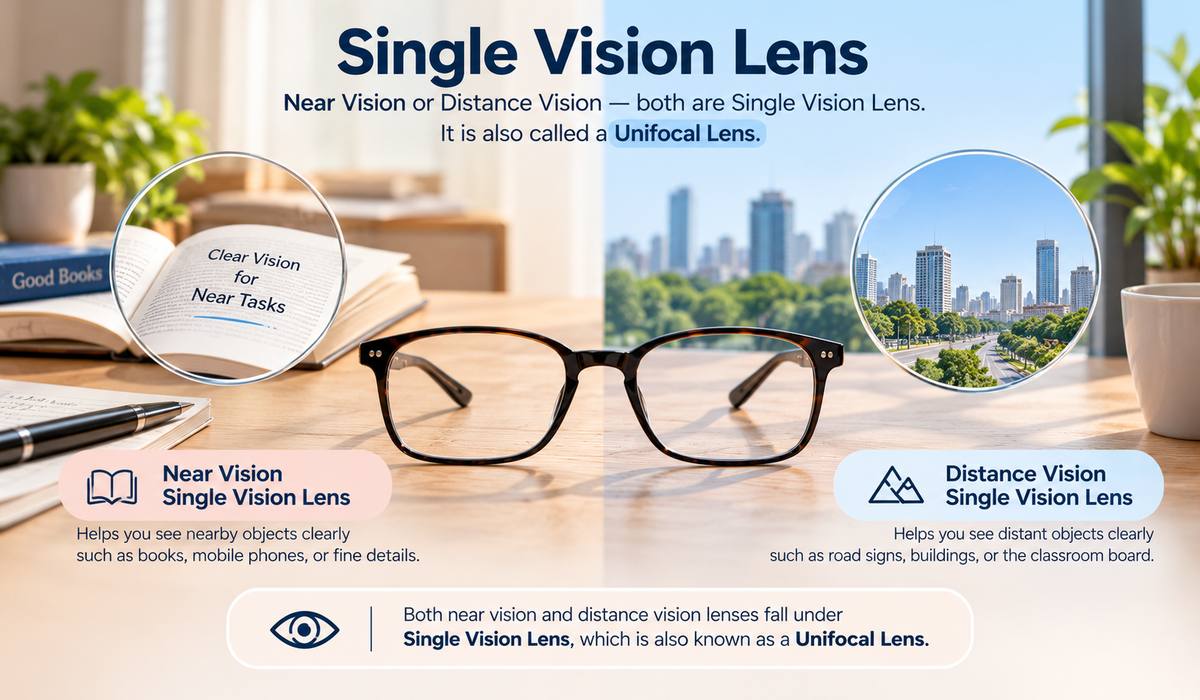
সহজভাবে বললে, যে লেন্সের পুরো অপটিক্যাল অংশে একটি নির্দিষ্ট দৃষ্টির প্রয়োজন অনুযায়ী পাওয়ার থাকে, তাকে Single Vision Lens বলা হয়। একে Unifocal Lens-ও বলা হয়। এই লেন্স কাছের জিনিস দেখার জন্য ব্যবহার করা যেতে পারে, আবার দূরের জিনিস পরিষ্কার দেখার জন্যও ব্যবহার করা যেতে পারে।
তবে Near Vision ও Distance Vision-এর জন্য ব্যবহৃত লেন্সের পাওয়ার এক নয়। কোন লেন্সটি আপনার প্রয়োজন, তা নির্ভর করে চোখের পরীক্ষা ও প্রেসক্রিপশনের ওপর।
Single Vision Lens কী?
Single Vision Lens হলো এমন এক ধরনের চশমার লেন্স, যা একটি নির্দিষ্ট দৃষ্টির প্রয়োজন পূরণের জন্য তৈরি করা হয়। এই লেন্সের পাওয়ার সাধারণত পুরো লেন্সজুড়ে একই প্রেসক্রিপশন অনুযায়ী থাকে।
যেমন, কারও দূরের জিনিস দেখতে অসুবিধা হলে তাকে Distance Vision-এর জন্য Single Vision Lens দেওয়া হতে পারে। আবার কারও বই পড়তে বা মোবাইলের লেখা দেখতে অসুবিধা হলে Near Vision-এর জন্য Single Vision Lens প্রয়োজন হতে পারে।
এই দুই ক্ষেত্রেই লেন্সের শ্রেণি একই—Single Vision। পার্থক্য হলো, লেন্সটি কোন দূরত্বে দেখতে সাহায্য করার জন্য নির্ধারিত হয়েছে।
Unifocal Lens ও Single Vision Lens কি একই?
হ্যাঁ, সাধারণত Unifocal Lens এবং Single Vision Lens একই ধরনের লেন্স বোঝাতে ব্যবহৃত হয়।
“Uni” অর্থ এক এবং “focal” শব্দটি ফোকাস বা দৃষ্টির অবস্থানের সঙ্গে সম্পর্কিত। অর্থাৎ, এই লেন্সে একটি নির্দিষ্ট দৃষ্টির প্রয়োজনের জন্য পাওয়ার দেওয়া হয়।
অন্যদিকে, Progressive Lens বা Bifocal Lens-এ বিভিন্ন দূরত্বে দেখার জন্য একাধিক পাওয়ার বা দৃষ্টির অংশ থাকে। তাই Single Vision Lens ও Multifocal Lens-এর মধ্যে মূল পার্থক্য হলো লেন্সের পাওয়ার কীভাবে সাজানো হয়েছে।
Distance Vision Single Vision Lens কী?
Distance Vision Lens মূলত দূরের জিনিস পরিষ্কার দেখার জন্য ব্যবহার করা হয়। যেমন, রাস্তার সাইনবোর্ড পড়া, দূরের লেখা দেখা, ক্লাসরুমের বোর্ড দেখা বা টেলিভিশন দেখতে এই লেন্সের প্রয়োজন হতে পারে।
যাদের মায়োপিয়া বা দূরের জিনিস ঝাপসা দেখার সমস্যা রয়েছে, তাদের ক্ষেত্রে Distance Vision-এর জন্য Single Vision Lens ব্যবহার করা হতে পারে। তবে সঠিক পাওয়ার নির্ধারণের জন্য চোখ পরীক্ষা করা জরুরি।
এই লেন্স দূরের দৃষ্টির জন্য তৈরি হলেও সব পরিস্থিতিতে কাছের কাজের জন্য সমান উপযোগী হবে, এমন নয়। আপনার বয়স, চোখের পাওয়ার ও কাছের কাজের প্রয়োজন অনুযায়ী আলাদা চশমার দরকার হতে পারে।
Near Vision Single Vision Lens কী?
Near Vision Lens কাছের জিনিস দেখতে সাহায্য করার জন্য তৈরি করা হয়। বই পড়া, মোবাইল ব্যবহার, সেলাই করা বা কাছ থেকে সূক্ষ্ম কাজ করার সময় এ ধরনের লেন্স প্রয়োজন হতে পারে।
বয়স বাড়ার সঙ্গে সঙ্গে চোখের স্বাভাবিক ফোকাস করার ক্ষমতা কমে যেতে পারে। এই অবস্থাকে Presbyopia বলা হয়। তখন অনেকের কাছের লেখা পড়তে অসুবিধা হয় এবং পড়ার চশমার প্রয়োজন হতে পারে।
Near Vision Single Vision Lens সাধারণত কাছের কাজের জন্য নির্ধারিত হয়। তবে সবার কাছের পাওয়ার এক নয়। তাই অন্য কারও পড়ার চশমা ব্যবহার না করে নিজের চোখ পরীক্ষা করিয়ে উপযুক্ত পাওয়ার নির্ধারণ করা উচিত।
Single Vision ও Progressive Lens-এর মধ্যে পার্থক্য কী?
দুটিই চশমার লেন্স হলেও ব্যবহারের ধরন আলাদা।
Single Vision Lens: একটি নির্দিষ্ট দৃষ্টির প্রয়োজনের জন্য তৈরি হয়—যেমন শুধু দূরের জন্য অথবা শুধু কাছের জন্য।
Progressive Lens: একই লেন্সের মধ্যে দূর, মাঝারি ও কাছের দৃষ্টির জন্য ধীরে ধীরে পাওয়ার পরিবর্তিত হয়। ফলে একটি চশমা দিয়ে বিভিন্ন দূরত্বে দেখতে সুবিধা হতে পারে।
যারা দূর ও কাছ—দুই ধরনের কাজের জন্য আলাদা চশমা ব্যবহার করতে চান না, তাদের ক্ষেত্রে Progressive Lens একটি বিকল্প হতে পারে। তবে এটি সবার জন্য প্রয়োজনীয় বা উপযুক্ত নয়। চোখের প্রেসক্রিপশন, কাজের ধরন ও ব্যক্তিগত সুবিধা বিবেচনা করে লেন্স নির্বাচন করা উচিত।
আপনার জন্য কোন লেন্সটি উপযুক্ত?
সঠিক লেন্স বেছে নেওয়ার আগে কয়েকটি বিষয় বিবেচনা করুন:
- দূরের জিনিস দেখতে সমস্যা হচ্ছে, নাকি কাছের জিনিস দেখতে?
- বই পড়া, কম্পিউটারে কাজ করা বা বাইরে চলাফেরার মধ্যে কোন কাজটি আপনার বেশি করতে হয়?
- আপনার প্রেসক্রিপশনে দূর ও কাছের জন্য আলাদা পাওয়ার দেওয়া আছে কি না?
- চশমাটি সারাদিন ব্যবহার করবেন, নাকি নির্দিষ্ট কাজের সময়?
- চোখের চিকিৎসক বা অপটিশিয়ান কোন ধরনের লেন্সের পরামর্শ দিয়েছেন?
শুধু লেন্সের নাম শুনে বা অন্য কারও চশমা দেখে নিজের জন্য লেন্স নির্বাচন করা ঠিক নয়। চোখের পরীক্ষা ও প্রেসক্রিপশন অনুযায়ী লেন্স নির্বাচন করাই সবচেয়ে ভালো উপায়।
শেষ কথা
Near Vision এবং Distance Vision—দুটিই Single Vision Lens-এর অন্তর্ভুক্ত হতে পারে। আবার এই লেন্সকে Unifocal Lens-ও বলা হয়। তবে নাম কাছাকাছি হলেও কোন লেন্সটি আপনার জন্য প্রয়োজন, তা নির্ভর করে আপনার দৃষ্টির সমস্যা ও প্রেসক্রিপশনের ওপর।
মনে রাখবেন, Single Vision Lens মানে শুধু দূরের বা শুধু কাছের চশমা নয়; এটি এমন লেন্স, যা একটি নির্দিষ্ট দৃষ্টির প্রয়োজন অনুযায়ী তৈরি করা হয়।
সচরাচর জিজ্ঞাসিত প্রশ্ন (FAQ)
১. Single Vision Lens ও Unifocal Lens কি একই?
হ্যাঁ। সাধারণত দুটি শব্দই একটি নির্দিষ্ট দৃষ্টির প্রয়োজনের জন্য তৈরি লেন্স বোঝাতে ব্যবহৃত হয়।
২. Near Vision ও Distance Vision কি Single Vision Lens হতে পারে?
হ্যাঁ। কাছের কাজের জন্য Near Vision Single Vision Lens এবং দূরের জন্য Distance Vision Single Vision Lens ব্যবহার করা যেতে পারে।
৩. Single Vision Lens দিয়ে কি দূর ও কাছ—দুটিই পরিষ্কার দেখা যায়?
এটি আপনার প্রেসক্রিপশন ও দৃষ্টির প্রয়োজনের ওপর নির্ভর করে। একটি নির্দিষ্ট দূরত্বের জন্য তৈরি লেন্স অন্য দূরত্বে সমানভাবে পরিষ্কার দেখাতে নাও পারে।
৪. Single Vision ও Progressive Lens-এর মধ্যে কোনটি ভালো?
কোনটি ভালো, তা আপনার চোখের পাওয়ার, বয়স, দৈনন্দিন কাজ এবং ব্যক্তিগত প্রয়োজনের ওপর নির্ভর করে। চোখের পরীক্ষা করিয়ে উপযুক্ত লেন্স নির্বাচন করুন।
তথ্যসূত্র
- American Academy of Ophthalmology (AAO): https://www.aao.org/eye-health
- American Optometric Association (AOA): https://www.aoa.org/healthy-eyes
- Cleveland Clinic — Presbyopia: https://my.clevelandclinic.org/health/diseases/8577-presbyopia
What Is a Single Vision Lens? Understanding Near Vision and Distance Vision Lenses
When choosing eyeglasses, you may come across terms such as Single Vision Lens, Near Vision Lens, and Distance Vision Lens. What do these terms mean? Are near vision and distance vision lenses completely different types of lenses, or do they belong to the same category?
Simply put, a lens designed with one prescribed optical power across its viewing area is generally called a Single Vision Lens. It is also commonly known as a Unifocal Lens. Depending on the prescription, it can be used to correct vision for nearby objects or for distant objects.
However, the power needed for near vision is not necessarily the same as the power needed for distance vision. The right lens depends on your eye examination and prescription.
What Is a Single Vision Lens?
A Single Vision Lens is designed to meet one particular vision requirement. Its optical power follows a single prescription across the lens, rather than gradually changing between different viewing zones.
For example, someone who has difficulty seeing distant objects may need a distance Single Vision Lens. Someone who struggles to read a book or see text on a mobile phone may need a near Single Vision Lens.
Both belong to the same lens category. The main difference is the viewing distance for which the lens is prescribed.
Are Unifocal Lenses and Single Vision Lenses the Same?
Yes. The terms Unifocal Lens and Single Vision Lens are generally used to describe the same type of lens.
“Uni” means one, while “focal” relates to focus. In practical eyewear terminology, a unifocal lens provides one prescribed optical power rather than separate zones for different viewing distances.
Bifocal and progressive lenses work differently because they provide multiple powers or viewing zones within the same lens.
What Is a Distance Vision Single Vision Lens?
A Distance Vision Lens is prescribed to help you see distant objects more clearly. It may be useful when reading road signs, viewing a classroom board, watching television, or recognizing objects at a distance.
People with myopia, commonly known as short-sightedness, may need distance Single Vision Lenses. However, the appropriate prescription must be determined through an eye examination.
A lens prescribed for distance vision may not provide the same level of comfort for close-up tasks. Depending on your age, prescription, and near vision needs, you may require a different solution for reading or other close work.
What Is a Near Vision Single Vision Lens?
A Near Vision Lens is designed for close-up activities such as reading books, using a mobile phone, sewing, or performing detailed work.
As people age, the eye’s natural ability to focus on nearby objects may gradually decrease. This condition is called presbyopia. It can make reading small print more difficult and may create a need for reading glasses.
A near Single Vision Lens is prescribed specifically for close work. The required power varies from person to person, so it is important to have your eyes examined rather than relying on someone else’s reading glasses.
What Is the Difference Between Single Vision and Progressive Lenses?
Although both are used in eyeglasses, they serve different purposes.
Single Vision Lenses: These are designed for one particular vision requirement, such as distance vision or near vision.
Progressive Lenses: These provide a gradual change in optical power for distance, intermediate, and near vision within the same lens. This can make it possible to use one pair of glasses for different viewing distances.
Progressive lenses may be an option for people who need correction for both distance and near vision and prefer not to switch between separate pairs of glasses. However, they are not necessary or suitable for everyone. The choice depends on your prescription, daily activities, and visual needs.
How Do You Choose the Right Lens?
Before selecting a lens, consider the following questions:
- Do you have difficulty seeing distant objects, nearby objects, or both?
- Do you spend more time reading, working on a computer, or moving around outdoors?
- Does your prescription specify different powers for distance and near vision?
- Will you wear the glasses throughout the day or only for particular activities?
- What type of lens has your eye care professional recommended?
Choosing a lens based only on its name or another person’s glasses is not a reliable approach. An eye examination and an appropriate prescription are the best starting points.
Final Thoughts
Near Vision and Distance Vision lenses can both belong to the Single Vision Lens category. Single Vision Lenses are also commonly called Unifocal Lenses. Although the terms are related, the correct lens for you depends on your prescription and the distance at which you need clear vision.
Remember, a Single Vision Lens is not limited to distance or near vision. It is a lens designed for one specific vision requirement.
Frequently Asked Questions
1. Are Single Vision and Unifocal Lenses the same?
Yes. Both terms generally refer to lenses designed around one prescribed optical power.
2. Can near vision and distance vision lenses both be Single Vision Lenses?
Yes. A lens prescribed for near tasks and one prescribed for distance tasks can both be Single Vision Lenses.
3. Can Single Vision Lenses provide clear vision for both near and far objects?
That depends on your prescription and visual needs. A lens designed for one viewing distance may not provide equally clear or comfortable vision at another distance.
4. Which is better: Single Vision or Progressive Lenses?
Neither is universally better. The appropriate option depends on your prescription, age, daily activities, and personal needs. Consult an eye care professional before choosing.
Sources and References
- American Academy of Ophthalmology (AAO): https://www.aao.org/eye-health
- American Optometric Association (AOA): https://www.aoa.org/healthy-eyes
- Cleveland Clinic — Presbyopia: https://my.clevelandclinic.org/health/diseases/8577-presbyopia