There is no item in your cart
Progressive Lens ব্যবহারে অভ্যস্ত হতে সময় লাগে কেন? জেনে নিন সহজ কিছু উপায়
নতুন চশমা নেওয়ার পর দূরের জিনিস পরিষ্কার দেখা গেলেও বই পড়তে বা মোবাইল ব্যবহার করতে গিয়ে প্রথম দিকে একটু অস্বস্তি হতে পারে। বিশেষ করে যারা প্রথমবার Progressive Lens ব্যবহার করছেন, তাদের ক্ষেত্রে এমন অভিজ্ঞতা হওয়া অস্বাভাবিক নয়।
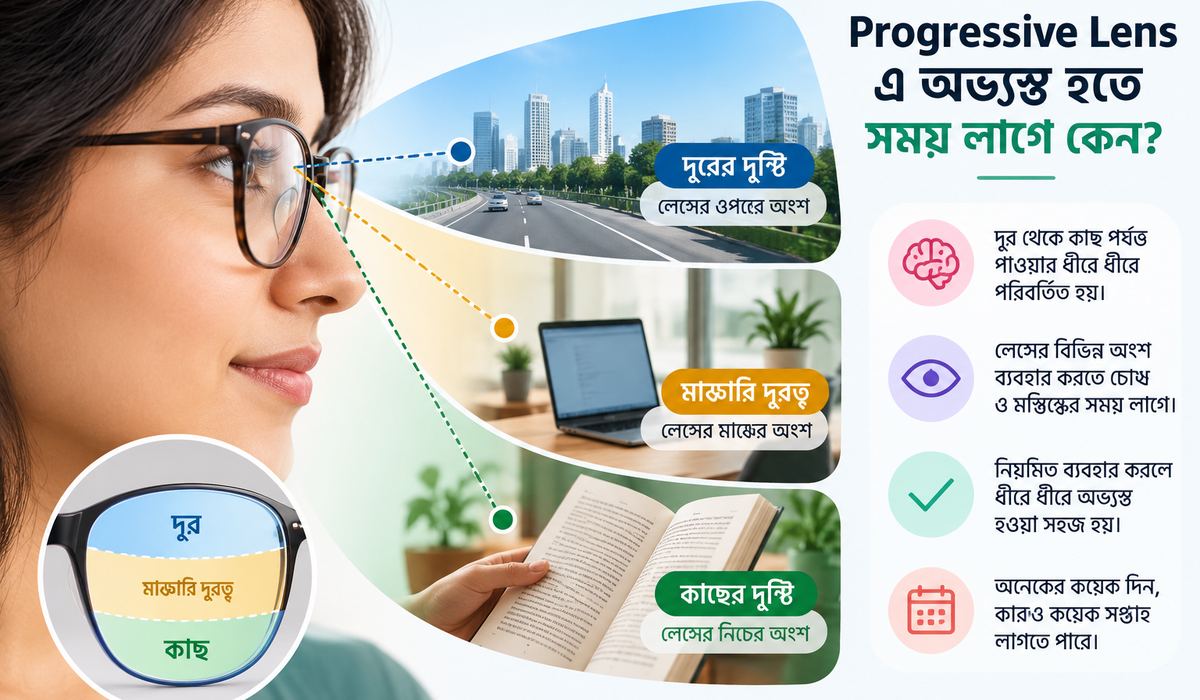
এর কারণ হলো, প্রগ্রেসিভ লেন্সে দূর থেকে কাছ পর্যন্ত দেখার জন্য একই লেন্সের মধ্যে ধীরে ধীরে পাওয়ার পরিবর্তিত হয়। লেন্সের ওপরের অংশ সাধারণত দূরের দৃষ্টির জন্য, মাঝের অংশ মাঝারি দূরত্বের কাজের জন্য এবং নিচের অংশ কাছের জিনিস দেখার জন্য ব্যবহৃত হয়। এই বিভিন্ন অংশ দিয়ে কীভাবে দেখতে হয়, তা বুঝে নিতে চোখ ও মস্তিষ্কের কিছুটা সময় লাগতে পারে।
তাই নতুন প্রগ্রেসিভ চশমা ব্যবহার শুরু করলে প্রথম কয়েক দিন ধৈর্য ধরুন। তবে অস্বস্তি দীর্ঘস্থায়ী হলে লেন্সের পাওয়ার ও ফিটিং ঠিক আছে কি না, সেটিও যাচাই করা জরুরি।
Progressive Lens কীভাবে কাজ করে?
প্রগ্রেসিভ লেন্স এমনভাবে তৈরি করা হয়, যাতে একই চশমা দিয়ে দূরের জিনিস দেখা, কম্পিউটারে কাজ করা এবং বই পড়ার মতো কাছের কাজ করা যায়। Bifocal Lens-এর মতো এতে দৃশ্যমান কোনো বিভাজন রেখা থাকে না। বরং লেন্সের পাওয়ার ওপর থেকে নিচের দিকে ধীরে ধীরে পরিবর্তিত হয়।
প্রধানত তিনটি দৃষ্টিক্ষেত্র থাকে:
- Distance Vision: লেন্সের ওপরের অংশ দিয়ে রাস্তার সাইনবোর্ড, দূরের মানুষ বা অন্যান্য দূরের বস্তু দেখা যায়।
- Intermediate Vision: মাঝের অংশ দিয়ে কম্পিউটার স্ক্রিন বা হাতের নাগালের একটু দূরের জিনিস দেখতে সুবিধা হয়।
- Near Vision: নিচের অংশ দিয়ে বই, মোবাইল বা কাছের লেখা পড়া যায়।
এই অংশগুলোর অবস্থান ও ব্যবহার সম্পর্কে অভ্যস্ত হতে কিছুটা সময় লাগতে পারে। সঠিকভাবে তৈরি ও ফিট করা লেন্স ব্যবহার করলে ধীরে ধীরে এই পরিবর্তনের সঙ্গে মানিয়ে নেওয়া সহজ হয়।
প্রথম দিকে কী ধরনের সমস্যা অনুভব হতে পারে?
প্রগ্রেসিভ লেন্স ব্যবহার শুরু করার পর সবার অভিজ্ঞতা এক রকম হয় না। কারও দ্রুত অভ্যাস হয়ে যায়, আবার কারও একটু বেশি সময় লাগে।
প্রথম দিকে যে বিষয়গুলো অনুভূত হতে পারে, সেগুলোর মধ্যে রয়েছে:
১. পাশের দিকে কিছুটা ঝাপসা দেখা
প্রগ্রেসিভ লেন্সের পাশের অংশে দৃষ্টির কিছুটা বিকৃতি বা ঝাপসা ভাব থাকতে পারে। তাই কোনো কিছুর দিকে তাকানোর সময় শুধু চোখ না ঘুরিয়ে মাথাও সেই দিকে ঘোরালে দেখতে সুবিধা হতে পারে।
২. বই পড়তে বা মোবাইল দেখতে মাথার অবস্থান বদলাতে হওয়া
কাছের জিনিস পরিষ্কার দেখতে লেন্সের নিচের অংশ দিয়ে তাকাতে হয়। এজন্য প্রথম দিকে মাথা ও চোখের অবস্থান সামঞ্জস্য করতে একটু সময় লাগতে পারে।
৩. সিঁড়ি দিয়ে ওঠানামার সময় অস্বস্তি
সিঁড়ির দিকে তাকানোর সময় ভুল করে লেন্সের কাছের দৃষ্টিক্ষেত্র দিয়ে দেখলে দূরত্ব সম্পর্কে ধারণা কিছুটা বদলে যেতে পারে। তাই হাঁটার সময় সামনে ও দূরের দিকে দেখার জন্য লেন্সের ওপরের অংশ ব্যবহার করা এবং সিঁড়িতে সতর্ক থাকা গুরুত্বপূর্ণ।
৪. মাথা ঘোরা বা চোখে চাপ অনুভব করা
নতুন লেন্সের সঙ্গে মানিয়ে নেওয়ার সময় কিছু মানুষের সাময়িক অস্বস্তি হতে পারে। তবে তীব্র বা দীর্ঘস্থায়ী মাথা ঘোরা, মাথাব্যথা কিংবা ঝাপসা দেখা হলে শুধু অভ্যাসের সমস্যা ভেবে অপেক্ষা করবেন না।
Progressive Lens-এ অভ্যস্ত হতে কত দিন লাগে?
এই প্রশ্নের উত্তর সবার জন্য এক নয়। অনেকেই কয়েক দিনের মধ্যে স্বচ্ছন্দ বোধ করতে শুরু করেন। আবার কারও ক্ষেত্রে কয়েক সপ্তাহ পর্যন্ত সময় লাগতে পারে। এটি নির্ভর করে লেন্সের ডিজাইন, প্রেসক্রিপশন, ফ্রেমের ফিটিং এবং আগে কী ধরনের চশমা ব্যবহার করতেন তার ওপর।
বিশেষ করে যারা প্রথমবার প্রগ্রেসিভ লেন্স ব্যবহার করছেন, তাদের জন্য কাছের ও দূরের দৃষ্টিক্ষেত্রের অবস্থান বুঝে নেওয়াটা নতুন অভিজ্ঞতা হতে পারে।
তবে মনে রাখবেন, সব অস্বস্তিই স্বাভাবিক মানিয়ে নেওয়ার অংশ নয়। চশমা ঠিকভাবে ফিট করা হয়েছে কি না এবং লেন্সের পাওয়ার ও পরিমাপ সঠিক কি না, সেটিও গুরুত্বপূর্ণ।
Progressive Lens-এ দ্রুত অভ্যস্ত হওয়ার কিছু উপায়
১. নতুন চশমা নিয়মিত ব্যবহার করুন
চোখ ও মস্তিষ্ককে নতুন লেন্সের সঙ্গে মানিয়ে নেওয়ার সুযোগ দিতে চিকিৎসক বা অপটিশিয়ানের নির্দেশনা অনুযায়ী চশমাটি নিয়মিত ব্যবহার করুন। বারবার পুরোনো ও নতুন চশমার মধ্যে পরিবর্তন করলে কিছু মানুষের অভ্যস্ত হতে বেশি সময় লাগতে পারে।
২. যে জিনিসটি দেখতে চান, তার দিকে মাথা ঘোরান
কোনো কিছু ডান বা বাঁ পাশে থাকলে শুধু চোখ ঘোরানোর পরিবর্তে মাথাও সেই দিকে ঘোরানোর অভ্যাস করুন। এতে লেন্সের উপযুক্ত অংশ দিয়ে দেখতে সুবিধা হতে পারে।
৩. কাছের লেখা পড়ার সময় নিচের অংশ ব্যবহার করুন
বই বা মোবাইল পড়ার সময় স্বাভাবিকভাবে নিচের দিকে তাকান, যাতে লেন্সের কাছের দৃষ্টিক্ষেত্র ব্যবহার করতে পারেন। প্রয়োজন অনুযায়ী মাথার অবস্থান সামান্য ঠিক করুন।
৪. প্রথম দিকে পরিচিত ও নিরাপদ পরিবেশে অনুশীলন করুন
নতুন চশমা পরে প্রথম কয়েক দিন বাড়িতে বা পরিচিত পরিবেশে হাঁটাচলা, পড়াশোনা ও দৈনন্দিন কাজ করে অভ্যস্ত হতে পারেন। সিঁড়ি দিয়ে ওঠানামা করার সময় সতর্ক থাকুন।
৫. ফ্রেমের ফিটিং ঠিক আছে কি না নিশ্চিত করুন
প্রগ্রেসিভ লেন্সের কার্যকারিতার জন্য শুধু পাওয়ার সঠিক হলেই যথেষ্ট নয়। চোখের অবস্থান, ফ্রেমের ফিটিং, PD এবং fitting height-এর মতো প্রয়োজনীয় পরিমাপও সঠিক হওয়া দরকার।
চশমা বারবার নিচে নেমে গেলে বা মুখে বাঁকা হয়ে বসলে লেন্সের দৃষ্টিক্ষেত্র ব্যবহার করতে অসুবিধা হতে পারে। প্রয়োজনে অপটিশিয়ানের সাহায্যে ফ্রেম ঠিক করিয়ে নিন।
কখন অপটিশিয়ানের পরামর্শ নেবেন?
নতুন প্রগ্রেসিভ লেন্স ব্যবহার করার পর অল্প সময়ের জন্য অস্বস্তি হতে পারে। কিন্তু সমস্যা যদি ক্রমাগত চলতে থাকে, তাহলে সেটিকে অবহেলা করা উচিত নয়।
নিচের পরিস্থিতিতে অপটিশিয়ান বা চোখের চিকিৎসকের পরামর্শ নিন:
- কয়েক সপ্তাহ পরও স্বচ্ছন্দে দেখতে না পারলে।
- দূর বা কাছের জিনিস পরিষ্কার দেখতে অসুবিধা হলে।
- মাথাব্যথা বা মাথা ঘোরা বারবার হলে।
- চশমা পরলে এক চোখে বেশি অস্বস্তি হলে।
- লেন্সের মধ্য দিয়ে তাকালে সব সময় ঝাপসা দেখলে।
প্রয়োজনে লেন্সের পাওয়ার, কেন্দ্রায়ন, fitting height এবং ফ্রেমের অবস্থান পরীক্ষা করা যেতে পারে। হঠাৎ দৃষ্টিশক্তি কমে যাওয়া বা তীব্র চোখের ব্যথা হলে দ্রুত চিকিৎসা নিন।
শেষ কথা
Progressive Lens-এর সবচেয়ে বড় সুবিধা হলো, একই চশমা দিয়ে বিভিন্ন দূরত্বে দেখার সুযোগ পাওয়া। তবে দূর থেকে কাছ পর্যন্ত লেন্সের পাওয়ার ধীরে ধীরে পরিবর্তিত হওয়ায় এর বিভিন্ন দৃষ্টিক্ষেত্র ব্যবহার করতে কিছুটা সময় লাগতে পারে।
নিয়মিত ব্যবহার, সঠিকভাবে মাথা ও চোখের অবস্থান পরিবর্তন এবং উপযুক্ত ফ্রেম ফিটিং—এই বিষয়গুলো নতুন লেন্সের সঙ্গে মানিয়ে নিতে সাহায্য করতে পারে।
মনে রাখবেন, প্রগ্রেসিভ লেন্সে অভ্যস্ত হতে সময় লাগা স্বাভাবিক হতে পারে। কিন্তু অস্বস্তি দীর্ঘস্থায়ী হলে শুধু অপেক্ষা না করে লেন্স ও ফিটিং পরীক্ষা করিয়ে নিন।
সচরাচর জিজ্ঞাসিত প্রশ্ন (FAQ)
১. Progressive Lens-এ অভ্যস্ত হতে কত দিন লাগে?
অনেকের কয়েক দিনের মধ্যে অভ্যাস হয়ে যায়, আবার কারও কয়েক সপ্তাহ লাগতে পারে। এটি ব্যক্তি, লেন্সের ডিজাইন ও ফিটিংয়ের ওপর নির্ভর করে।
২. নতুন প্রগ্রেসিভ চশমা পরলে পাশের দিকে ঝাপসা লাগে কেন?
লেন্সের পাশের অংশে কিছুটা অপটিক্যাল বিকৃতি থাকতে পারে। মাথা ঘুরিয়ে সঠিক অংশ দিয়ে তাকালে দেখতে সুবিধা হতে পারে। তবে ঝাপসা দেখা দীর্ঘস্থায়ী হলে লেন্সের ফিটিং পরীক্ষা করান।
৩. Progressive Lens পরে সিঁড়ি দিয়ে ওঠানামা করা কি নিরাপদ?
অভ্যস্ত হওয়ার সময় সতর্ক থাকা জরুরি। সিঁড়ি দিয়ে ওঠানামার সময় নিচের কাছের দৃষ্টিক্ষেত্র দিয়ে তাকালে দূরত্ব সম্পর্কে ধারণা বদলে যেতে পারে। ধীরে চলুন এবং প্রয়োজনে হাতল ব্যবহার করুন।
৪. অভ্যস্ত হওয়ার সময় কি পুরোনো চশমা ব্যবহার করা যাবে?
এ বিষয়ে আপনার অপটিশিয়ানের পরামর্শ অনুসরণ করুন। নতুন লেন্স নিয়মিত ব্যবহার করলে অনেকের মানিয়ে নিতে সুবিধা হয়। তবে অস্বস্তি বেশি হলে জোর করে ব্যবহার না করে লেন্সের ফিটিং পরীক্ষা করান।
৫. কয়েক সপ্তাহ পরও সমস্যা থাকলে কী করব?
অপটিশিয়ানের কাছে গিয়ে পাওয়ার, PD, fitting height এবং ফ্রেমের অবস্থান পরীক্ষা করান। প্রয়োজনে চোখের চিকিৎসকের পরামর্শ নিন।
তথ্যসূত্র
১. ZEISS — Tips for Better Wearing Comfort of Progressive Lenses
২. ZEISS — Progressive Lenses: What You Need to Know
৩. American Academy of Ophthalmology — Pros and Cons of Progressive Lenses
দ্রষ্টব্য: এই লেখাটি সাধারণ তথ্যের জন্য। ব্যক্তিভেদে অভ্যস্ত হওয়ার সময় আলাদা হতে পারে। দীর্ঘস্থায়ী অস্বস্তি বা দৃষ্টির সমস্যা হলে চোখের চিকিৎসক বা যোগ্য অপটিশিয়ানের পরামর্শ নিন।
Why Progressive Lenses Take Time to Get Used To
When you get a new pair of glasses, distant objects may appear clear, but reading a book or using your phone can feel slightly uncomfortable at first. This experience is not unusual, especially for people wearing progressive lenses for the first time.
Progressive lenses have gradually changing optical power from the top to the bottom of the lens. The upper area is generally used for distance vision, the middle area for intermediate tasks, and the lower area for near vision. Your eyes and brain may need some time to learn how to use these different viewing zones comfortably.
If you have recently started wearing progressive lenses, give yourself time to adjust. However, if discomfort continues, it is important to check whether the prescription and lens fitting are correct.
How Do Progressive Lenses Work?
Progressive lenses are designed to help you see at different distances with one pair of glasses. Unlike bifocal lenses, they do not have a visible dividing line. Instead, the optical power changes gradually across the lens.
There are three main viewing areas:
- Distance Vision: The upper portion helps you see distant objects, such as road signs and people across the room.
- Intermediate Vision: The middle portion supports tasks such as working on a computer or viewing objects at an intermediate distance.
- Near Vision: The lower portion is used for close-up activities, such as reading a book or looking at your phone.
Learning where these areas are positioned and how to use them may take a little practice. Properly prescribed and fitted lenses can make the adjustment process easier.
What Can You Experience at First?
Everyone adapts differently to progressive lenses. Some people become comfortable within a few days, while others need more time.
1. Slight Blur at the Sides
Some peripheral distortion or blur is a normal characteristic of many progressive lens designs. Turning your head toward the object you want to see, rather than moving only your eyes, may help you look through the appropriate part of the lens.
2. Adjusting Your Head Position While Reading
To see nearby text clearly, you generally need to look through the lower part of the lens. At first, you may need to adjust your head and gaze to find the clearest viewing area.
3. Discomfort on Stairs
Looking down through the near-vision portion of progressive lenses can alter how steps appear. When walking or using stairs, be cautious and use the upper distance area when looking ahead. Take your time while learning to use the lenses.
4. Eye Strain or Dizziness
Some people experience temporary discomfort while adapting to new lenses. However, severe or persistent dizziness, headaches, or blurred vision should not simply be dismissed as part of the adjustment process.
How Long Does It Take to Adjust to Progressive Lenses?
There is no single adjustment period that applies to everyone. Many people begin to feel comfortable within a few days, while others may need several weeks. The time required depends on factors such as the lens design, prescription, frame fitting, and previous experience with glasses.
For first-time wearers, learning to use the different viewing zones can feel unfamiliar at first.
Remember that not every problem is caused by the adjustment process. Accurate prescription details, proper lens positioning, and a well-fitted frame are also essential for comfortable vision.
Tips to Help You Adjust to Progressive Lenses
1. Wear Your New Glasses Consistently
Follow your optician’s instructions and wear your new progressive lenses regularly to give your eyes and brain time to adapt. Frequently switching between old and new glasses may make the adjustment more difficult for some people.
2. Turn Your Head Toward What You Want to See
When looking at an object to your left or right, try turning your head toward it instead of moving only your eyes. This can help you look through a more suitable area of the lens.
3. Use the Lower Portion for Reading
When reading a book or using your phone, lower your gaze naturally to access the near-vision area. Adjust your head position slightly if necessary to find a comfortable viewing angle.
4. Practise in Familiar Surroundings
During the first few days, practise walking, reading, and doing everyday tasks in a familiar environment. Be particularly careful when using stairs until you feel comfortable with your new glasses.
5. Make Sure the Frame Fits Properly
A correct prescription alone is not enough. Progressive lenses also require appropriate fitting measurements, including pupillary distance (PD), fitting height, and proper lens positioning.
If your glasses repeatedly slide down your nose or sit unevenly, the viewing zones may no longer align as intended. Ask an optician to adjust the frame if needed.
When Should You Consult an Optician?
Some initial discomfort may occur when you start wearing progressive lenses, but persistent problems should not be ignored.
Consult an optician or eye care professional if:
- You still cannot see comfortably after a few weeks.
- Near or distance vision remains consistently blurred.
- You experience repeated headaches or dizziness.
- One eye feels significantly less comfortable than the other.
- Your vision remains unclear when looking through the appropriate lens area.
Your optician may check the prescription, lens centration, fitting height, and frame position. Sudden vision loss or severe eye pain requires urgent medical attention.
Final Thoughts
One of the main advantages of progressive lenses is that they allow you to see at different distances without changing glasses. However, because the optical power changes gradually from distance to near vision, learning to use the different viewing areas may take some time.
Consistent wear, appropriate head and eye movements, and accurate frame fitting can all help make the transition easier.
Remember, needing time to adjust to progressive lenses can be normal. But if discomfort persists, do not simply wait it out—have your lenses and frame fitting checked.
Frequently Asked Questions
1. How long does it take to get used to progressive lenses?
Many people adjust within a few days, while others may need several weeks. The adjustment period varies according to the wearer, lens design, and fitting.
2. Why do the sides of progressive lenses look blurry?
Some progressive lenses have peripheral areas where distortion or blur may occur. Turning your head toward the object can help. If the blur persists, have your lenses checked.
3. Is it safe to use stairs while wearing progressive lenses?
Take extra care while adjusting to new lenses. Looking through the near-vision area when looking down may affect how steps appear. Walk slowly and use a handrail when needed.
4. Can I wear my old glasses while adjusting to progressive lenses?
Follow your optician’s advice. Consistent use of your new lenses may help you adapt, but if discomfort is significant, have the fit and prescription checked rather than forcing yourself to continue.
5. What should I do if I still have problems after a few weeks?
Ask your optician to check your prescription, PD, fitting height, and frame position. Consult an eye care professional if the problems continue.
Sources and References
- ZEISS — Tips for Better Wearing Comfort of Progressive Lenses
- ZEISS — Progressive Lenses: What You Need to Know
- American Academy of Ophthalmology — Pros and Cons of Progressive Lenses
Disclaimer: This article is for general educational purposes only. Adaptation time varies from person to person. Consult an eye care professional or qualified optician if you experience persistent discomfort or vision problems.